After the emergence of COVID-19 in America, many states declared a state of emergency. In these emergency decrees were restrictions to many aspects of normal life. One of the main restrictions was changing how people can freely exercise religion. Many states limited how many people could attend church and instituted social distancing requirements within the churches. Many people, especially those on the religious right, view any restrictions on the right to free exercise of religion as unconstitutional. As with all the other rights enshrined in the First Amendment, the right to free exercise of religion is subject to time-place-manner restrictions. Unfortunately, the pandemic clashed with society’s broader culture wars. People viewed these restrictions as big government infringing upon and entangling itself with religion.
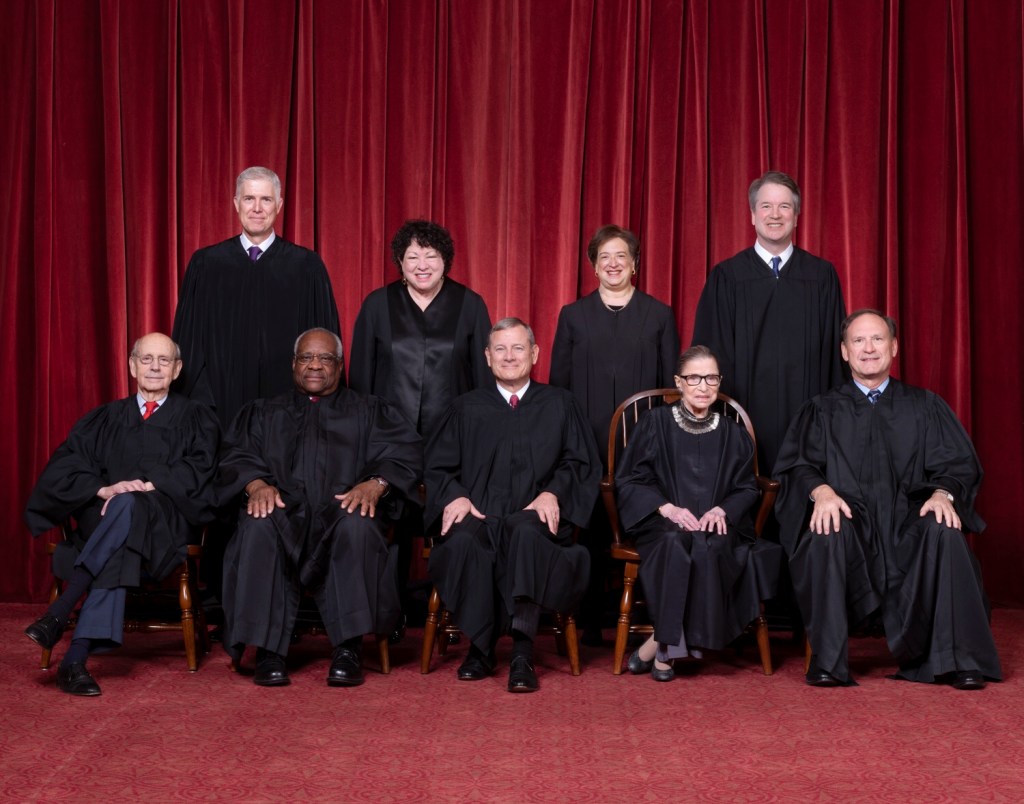
This issue came to the Supreme Court in South Bay United Pentecostal Church, et al. v. Gavin Newsom, Governor of California, et al. In this application for injunctive relief, a California church wanted the Court to enjoin enforcement of state restrictions on attendance at religious services. Just as society was politically divided on this issue, the Court was also divided in a 5-4 decision rejecting the church’s request. Unsurprisingly, Chief Justice Roberts was the deciding vote. The Chief Justice ultimately sided with the “liberal bloc” on this highly politicized issue. Weeks before, President Trump declared religious services as essential and called upon the states to allow churches to fully reopen.
The Court rarely gives reasoning for their denial of injunctive relief, but Justice Kavanaugh wrote such a scathing dissent that the Chief Justice must have felt compelled to respond. The Chief Justice wrote that the factual circumstances of the virus warranted Governor Newsom’s actions. The fact that churches are allowed to hold services with up to 25% of building capacity or a maximum of 100 attendees sufficed the Constitution’s requirements. Chief Justice Roberts made clear that the restrictions are more lenient for house of worship compared to the more severe restrictions applied to comparable secular gatherings such as movie theaters and lecture halls.
Justice Kavanaugh’s dissent was joined by Justice Gorsuch and Justice Thomas. Interestingly, Justice Alito would have granted the application but did not join Justice Kavanaugh’s dissent. Justice Alito, therefore, did not give any reasoning for his dissent. In the dissent, Justice Kavanaugh says these restrictions are discriminatory and violate the First Amendment. He says the 25% cap applies to churches but not “comparable secular businesses” such as supermarkets, offices, factories, and marijuana dispensaries. Justice Kavanaugh concedes that California “undoubtedly has a compelling interest” for the restrictions, but the restrictions are not applied evenly to churches and comparable secular matters. “The State may not take a looser approach with, say, supermarkets, restaurants, factories, and offices while imposing stricter requirements on places of worship.” Clearly, the dissenters felt passionate about this issue.
To further complicate matters, the Court issued this rejection as the country was engulfed in rage over the death of George Floyd. Thousands of people were marching in the street. Many of the protesters were not wearing masks or adhering to social distancing standards. This rejection by the Court enraged the religious right. These churchgoers turned on their televisions and saw the protesters exercising their First Amendment rights to free speech and assembly while they felt they could not exercise their First Amendment right to free exercise of religion. This enraged devout churchgoers who could not attend religious services due to the stay at home orders.
Organized religion is easier to curb than the decentralized nature of the protests. People marching in the streets could not be curbed because there was no overarching organization in charge of the protests. People, simply, got out of their home and joined their neighbors in protesting. Government could easily contact churches with the newest rules and regulations of the stay at home orders, but people marching in the streets could not be contacted as easily as religious leaders. Although the right to free exercise of religion is as equally fundamental as the rights to speech and assembly, the decentralized nature of the protests made enforcing time-place-manner restrictions and social distancing requirements nearly impossible. Devout churchgoers viewed the protesters as receiving more favorable treatment. Unfortunately, this created a divide between the protests and religious services. Even though free exercise of religion and free speech and assembly are equally fundamental under the First Amendment, the circumstances of the two situations were completely different.
 The Court and Public Life